Policy
Policy work, testimony, and reports

Policy papers
-
Earned Paid Time Off Should Be a Basic Right
The Hamilton Project, Brookings Institution · 2026
Follow-up essay returning to the case for a federal guarantee of earned paid time off — accruing with hours worked and usable for any purpose (sickness, caregiving, or rest). Revisits the argument Stevenson made in her 2024 Hamilton Project proposal, in light of continued inaction and the one-third of American workers who still have no paid time off of any kind.
-
What Can the Private Sector Do to Increase Support for Democratic Capitalism?
In 2025 Annual Report on the Health of Democratic Capitalism: Examining the Role of Corporate Boards, Denny Center for Democratic Capitalism, Georgetown Law · 2025
Stevenson's contribution to the Denny Center's third annual report on the health of democratic capitalism, focused on the role of corporate boards. The essay argues that a broadly-shared case for democratic capitalism depends on what the private sector does with its autonomy — how firms treat workers, how boards handle concentration and competition, and how corporate conduct either reinforces or erodes public trust in markets and democracy.
-
All Workers Should Be Able to Earn Time Off: The Federal Government Should Guarantee It
The Hamilton Project, Brookings Institution · 2024
Preview essay laying out the case for a federal earned-paid-time-off guarantee. The US is the only high-income country that does not guarantee workers any paid time off; this piece makes the case for modernizing the Fair Labor Standards Act so that every qualified worker can accrue and use paid time off, for any purpose, as part of the national floor on working conditions. Published in February 2024 as the companion to Stevenson's October 2024 Hamilton Project policy proposal.
-
Economic and Health Impacts of Paid Parental, Caregiving, and Medical Leave: A Review of Existing Literature and Evidence
with Koryn Kling, H. Luke Shaefer · Poverty Solutions, Report to the State of Michigan · 2024
A review of the existing literature on paid leave programs — parental, caregiving, and medical — and their effects on workers, children, employers, and state economies. The evidence supports statewide paid leave as a cost-effective policy that benefits both families and the broader economy.
-
A Federal Guarantee for Earned Paid Time Off
The Hamilton Project, Brookings Institution · 2024
A policy proposal to update the Fair Labor Standards Act to guarantee all workers the right to accrue paid time off — usable for illness, caregiving, or vacation. The United States is the only advanced economy without a national paid-time-off guarantee.
-
The Resilient and Adapting Economy
In Evaluating the Quality of Market Competition — 2023 Annual Report on the Health of Democratic Capitalism, Denny Center, Georgetown Law · 2023
Responsive essay to the Denny Center's 2023 annual report on the quality of market competition. Stevenson argues the US economy remains remarkably resilient and capable of adaptation, even as rising industry concentration, slowing productivity, and a falling labor share raise real concerns about whether the benefits of that resilience are being broadly shared.
-
An Imperfect Labor Market Recovery
In Denny Center Inaugural Report on the Health of Democratic Capitalism, Georgetown Law · 2022
By mid-2022 the US had recovered all pandemic job losses in aggregate, but the headline hid deep sectoral gaps, persistent labor-force-participation declines, and unequal burdens by gender, race, and occupation. Stevenson's responsive essay to the Denny Center's inaugural report argues the recovery was more fragile than aggregate numbers suggested and that democratic capitalism's legitimacy depends on how widely the gains are shared.
-
Women, Work, and Families: Recovering from the Pandemic-Induced Recession
The Hamilton Project, Brookings Institution · 2021
An analysis of how the pandemic recession fell on women, mothers, and caregiving families, and a set of policy recommendations — on child care, paid leave, and the infrastructure of care — for a recovery that rebuilds rather than reinstates the pre-pandemic labor market for women.
-
The Initial Impact of COVID-19 on Labor Market Outcomes Across Groups and the Potential for Permanent Scarring
The Hamilton Project, Brookings Institution · 2020
Documents the early unemployment shock from COVID-19 across demographic groups, with particular attention to women, workers of color, and young workers — and the mechanisms by which temporary separations can harden into permanent scarring if policy does not act quickly.
-
Paid Leave for Caregiving: Issues and Answers
with Isabel Sawhill · AEI-Brookings Paid Leave Project · 2020
A synthesis of the evidence and policy design questions for paid leave that goes beyond parental leave to include caregiving for aging relatives and people with serious illness. Most Americans are caregivers at some point in their lives; the U.S. labor market is not designed for that reality.
-
Business Tax Reform and the Labor Market
with Jason Furman · In Strain (ed.), The U.S. Labor Market, American Enterprise Institute · 2016
Evaluates proposed business tax reforms through the lens of the labor market: who bears the incidence, how investment and wages respond, and which reforms are most likely to raise worker compensation without eroding the corporate tax base.

Congressional testimony
-
Employment, Inflation, and Gender Gaps: Why Are Voters Unhappy in a Booming Economy?
U.S. Senate Democratic Caucus · December 1, 2024
Spoken testimony before the U.S. Senate Democratic Caucus on the gap between a strong post-pandemic recovery and the sour mood of voters. Stevenson discussed how the cumulative price-level shock of the inflation surge kept weighing on household perceptions even as the pace of inflation cooled, the gender dimensions of labor-force participation and wage growth during the recovery, and what policymakers should draw from the disconnect between headline indicators and lived economic experience.
-
Building a Resilient Economy: Shoring Up Supply
U.S. Senate Committee on Banking, Housing, and Urban Affairs · March 22, 2022
Testifying on supply constraints and rising inflation, Stevenson argued that while goods-sector inflation was likely to ease with pandemic recovery, the bigger risk was rising service-sector inflation driven by a depressed labor supply — particularly among women, who left the labor force at higher rates than men during the pandemic. She recommended two steps to rebuild labor supply: expanding access to childcare and home nursing care so family caregivers can return to paid work, and funding training and community college programs whose pandemic-era enrollment declines threatened future shortages of skilled workers.
-
COVID Child Care Challenges: Supporting Families and Caregivers
U.S. House Select Subcommittee on the Coronavirus Crisis · March 2, 2022
Stevenson argued that the U.S. economy now depends critically on reliable childcare access — mothers are among the most educated workers and their labor force participation has been a major engine of growth — yet the childcare sector remained well below pre-pandemic employment and increasingly unaffordable for working families. Her policy recommendation centered on dependable, long-term public investment that decouples what parents can afford from what early educators must be paid, so that childcare programs can remain viable while fairly compensating the workers who staff them.
-
Help Wanted: A Stronger Labor Market for Robust Growth
Joint Economic Committee · October 27, 2021
Against the claim that pandemic unemployment benefits were keeping workers on the sidelines, Stevenson pointed out that states ending benefits early saw no job rebound, and argued instead that three other factors were holding back labor supply: the ongoing pandemic itself, unmet caregiving demands for children and adults, and shifts in what workers want from work. Her policy prescription was to support paid family leave, affordable childcare, and early childhood education — investments that reduce the flow of workers out of the labor force and make sustained employment feasible for the two-thirds of young children whose parents all work.
-
The Role of Child Care in an Equitable Post-Pandemic Economy
U.S. Senate Committee on Banking, Housing, and Urban Affairs · Subcommittee on Economic Policy · June 23, 2021
Stevenson argued that childcare functions like the banking system — not a boutique service but infrastructure that enables the rest of the economy to function — and that the pandemic had exposed how badly the United States has failed to adapt childcare, workplace flexibility, and parental leave policies to a labor market in which mothers are co-equal earners in most households. She urged the Banking Committee to treat childcare as a structural investment: high-quality early childhood education yields roughly $9 in long-term benefits per $1 invested and would narrow the kindergarten achievement gap, with the Lanham Act of 1940 offering precedent that universal public childcare can work in the U.S.
-
The Consequences of Inaction on COVID Tax Legislation
U.S. House Committee on Ways and Means · Subcommittee on Select Revenue Measures · September 11, 2020
At a virtual hearing examining the impact on families and small businesses of Congress's failure to extend pandemic-era tax and unemployment provisions — most prominently the HEROES Act passed by the House in May but still stalled in the Senate — Stevenson testified on the labor-market and household-income consequences of continued inaction as initial COVID relief programs expired while the recovery remained incomplete. Her central argument was that the economic cost of delay dwarfed the fiscal cost of acting, and that direct support to households and small employers was essential to prevent a deeper downturn.
-
Unemployment Challenges
Washington State Legislative Special Committee on Economic Recovery · June 16, 2020
Stevenson testified before Washington State's Special Committee on Economic Recovery during the early months of the COVID-19 recession, addressing the depth of the labor-market shock and the role of unemployment insurance and federal fiscal support in stabilizing households and preventing the kind of long-term scarring that followed the 2008 downturn.
-
Improving Family Stability for the Well-Being of American Children
Joint Economic Committee · February 25, 2020
Stevenson argued that the problems children face in single-parent families stem primarily from insufficient income and socioeconomic stress rather than from family structure itself, and that policies which raise incomes and give parents time — paid family leave, affordable childcare, higher wages for low earners, and expanded refundable tax credits — do more for child well-being than efforts to promote particular family arrangements. Modern families, she argued, need economic security and flexibility to thrive: women's workforce participation has become essential to household income, and maternal responsibilities remain substantial even as father involvement has grown.
-
The Employer Information Report (EEO-1)
U.S. Equal Employment Opportunity Commission · November 20, 2019
At the EEOC's public hearing on whether to continue collecting pay data through the EEO-1 Component 2, Stevenson argued that reducing explicit and implicit gender, racial, and ethnic pay discrimination requires the intentional evaluation of decisions and outcomes — which in turn requires collecting pay data. She urged the Commission to analyze the 2017 and 2018 data it had already received before abandoning the tool, and noted that the existing binned-data approach already balances usefulness against employer burden because most firms already have the payroll systems to provide this information at minimal additional cost.
-
Small Business and the American Worker
U.S. Senate Committee on Small Business and Entrepreneurship · March 6, 2019
Stevenson testified on the conditions facing the modern American worker — arguing that technology is primarily reshaping the tasks workers perform rather than eliminating jobs wholesale, and that what constrains employment is the country's inadequate family-support infrastructure (childcare, paid leave, workplace flexibility) rather than a shortfall in worker skills. She pressed the case that small businesses benefit from, rather than are burdened by, the kinds of family-friendly labor standards that their larger competitors already offer.
-
A Record Six Million U.S. Job Vacancies: Reasons and Remedies
Joint Economic Committee · July 12, 2017
Stevenson argued that the record six million job vacancies of mid-2017 fundamentally reflected a strong labor market rather than a skills shortage, since wages were not rising fast enough to signal the bidding war a true shortage would produce. Filling these positions required a mix of strategies: expanding apprenticeships and evidence-based training programs, investing in four-year college access and early childhood education, and restoring the worker bargaining power that non-compete clauses, pay-secrecy rules, and weakened unions had eroded over the preceding decades.
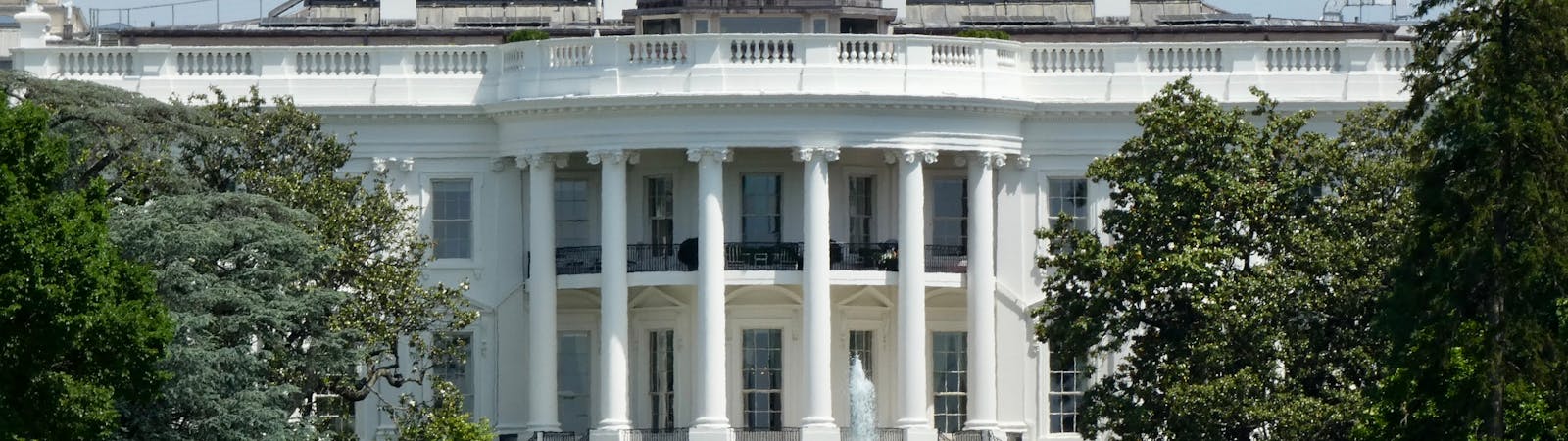
Council of Economic Advisers
2013–2015
As a member of President Obama's Council of Economic Advisers, Stevenson contributed to several major reports and issue briefs.
-
Economic Report of the President 2015
with Council of Economic Advisers · Council of Economic Advisers, Executive Office of the President · 2015
The 2015 Economic Report of the President, prepared by the Council of Economic Advisers, reviews the state of the U.S. economy six years into the recovery. Topics include middle-class economics, the changing nature of work, business tax reform, climate and energy policy, the Affordable Care Act, and inequality of opportunity.
-
Five Facts About the Gender Pay Gap
Council of Economic Advisers / The White House · 2015
An explainer from the Obama White House CEA laying out five key facts about the gender wage gap: its size, how it varies by age and occupation, the roles of motherhood and occupational sorting, and why the gap matters for the economy as a whole.
-
Gender Pay Gap: Recent Trends and Explanations
with Council of Economic Advisers · Council of Economic Advisers / The White House · 2015
A CEA issue brief — companion to the Equal Pay Day blog post 'Five Facts About the Gender Pay Gap' — decomposing the 21-cent gap between median male and female earnings, examining how much is explained by occupation, hours, and motherhood, and how much remains unexplained.
-
An 'Experiment' in Universal Child Care in the United States: Lessons from the Lanham Act
Council of Economic Advisers / The White House · 2015
Revisits the Lanham Act of 1940 — the only time the United States has operated a federally-funded universal child care program — and draws lessons for contemporary debates over paid leave and subsidized child care.
-
Occupational Licensing: A Framework for Policymakers
with Department of the Treasury, Department of Labor, Council of Economic Advisers · Council of Economic Advisers / The White House · 2015
A joint report from the Treasury Office of Economic Policy, the Council of Economic Advisers, and the Department of Labor documenting the five-fold rise in occupational licensing since the 1950s — now reaching roughly a quarter of U.S. workers — and setting out a framework for states to evaluate which licensing requirements protect consumers and which mainly raise prices and limit workforce mobility.
-
Expanding Opportunities for Women in Business
with Council of Economic Advisers · Council of Economic Advisers / The White House · 2015
A CEA issue brief documenting the under-representation of women among U.S. business owners, the financing and networking barriers they face, and the policy and procurement tools that have been used to widen access to entrepreneurship.
-
The Economic Case for Raising the Minimum Wage
with Council of Economic Advisers · Council of Economic Advisers / The White House · 2014
A CEA deck assembling the empirical case for raising the federal minimum wage to $10.10: documenting the erosion of its real value since the late 1960s, reviewing the modern literature on employment effects, and estimating the coverage and distributional impact of the proposal before Congress.
-
Economic Report of the President 2014
with Council of Economic Advisers · Council of Economic Advisers, Executive Office of the President · 2014
The 2014 Economic Report of the President, prepared by the Council of Economic Advisers, reviews the state of the U.S. economy and presents the Administration's economic agenda. Topics include the ongoing recovery from the Great Recession, labor market conditions, long-term growth, reducing inequality, expanding opportunity, and strengthening economic security for working families.
-
The Economics of Fatherhood and Work
with Council of Economic Advisers · Council of Economic Advisers / The White House · 2014
A CEA briefing documenting the changing time allocation of American fathers — more hours with children, more time on housework, and rising demand for workplace flexibility — and what it implies for family-friendly workplace policy. Companion to the White House Summit on Working Families.
-
The Economics of Paid and Unpaid Leave
with Council of Economic Advisers · Council of Economic Advisers / The White House · 2014
A CEA report laying out who has access to paid leave in the United States and who does not, the economic case for expanding it, and the experience of U.S. states and peer countries that have already guaranteed paid family, medical, or sick leave. Released ahead of the White House Summit on Working Families.
-
Understanding the Decline in the Labor Force Participation Rate in the United States
with Steven Braun, Jess Coglianese, Jason Furman, James Stock · Council of Economic Advisers / VoxEU · 2014
A decomposition of the post-2008 decline in U.S. labor force participation into demographic (aging-driven) and behavioral components, with implications for how much 'slack' remains in the labor market.
-
The War on Poverty 50 Years Later: A Progress Report
with Council of Economic Advisers · Council of Economic Advisers / The White House · 2014
A CEA report revisiting the Johnson-era War on Poverty fifty years after its launch. Uses a fuller set of post-tax-and-transfer measures to track how much poverty has actually fallen, how the composition of the poor has shifted, and where public programs have been most — and least — effective.
-
Women's Participation in Education and the Workforce
with Council of Economic Advisers · Council of Economic Advisers / The White House · 2014
A CEA report charting women's rising share of college degrees, falling labor-force participation since 2000, and the policy areas — child care, paid leave, workplace flexibility, and equal-pay enforcement — where action could close the remaining gaps with men.
-
Work-Life Balance and the Economics of Workplace Flexibility
with Council of Economic Advisers · Council of Economic Advisers / The White House · 2014
An updated CEA report synthesizing the evidence on flexible work arrangements — telework, predictable scheduling, part-time parity — and the productivity, retention, and family outcomes that follow when employers offer them. Prepared for the White House Summit on Working Families.
White House blog posts
-
Trends in Occupational Licensing and Best Practices for Smart Labor Market Regulation
with Jeffrey Zients · July 28, 2015
-
The Employment Situation in June
July 2, 2015
-
Why Access to Free Community College Matters
January 9, 2015
-
5 Things You Need to Know About Women and the Economy
September 5, 2014
-
94 Years Later, Here's Where We Are
August 27, 2014
-
Important Tools to Lift Wages and Reduce Poverty, Particularly for Women
with Lily Batchelder · March 26, 2014
-
The 2014 Economic Report of the President
with Jason Furman, Jim Stock · March 10, 2014
Speeches and press briefings
-
On-the-Record Call with Jason Furman on the CBO Report on Minimum Wage
White House press call · February 18, 2014
-
The Role of the Council of Economic Advisers in Bringing Economic Research to Policy Making
Ned Gramlich Memorial Conference, Federal Reserve Board · May 30, 2014
-
Family Participation in the Workforce
Urban Institute · April 30, 2014
-
More Than a Number: Combatting Pay Discrimination in the Workplace
Center for American Progress · April 7, 2014
-
Next Steps in the White House Evidence and Innovation Agenda
Actionable Intelligence for Social Policy, University of Pennsylvania · November 5, 2013
Additional CEA-era speeches, memoranda, and blog posts are at the Obama White House archive. Stevenson's current board and advisory roles are on the Current appointments page.